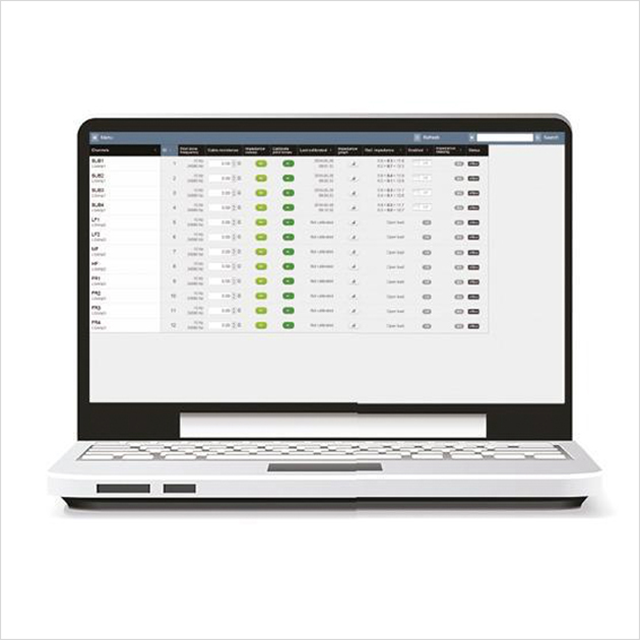
CAFE with ESP: Integrated Software for Fast System Configuration and Surveillance
In addition to providing comprehensive system surveillance and configuration of RPM and other amplifier features such as ISVPL and Breaker Emulation Limiter (BEL), CAFÉ also includes valuable help to save the environment. In combination with the RPM configuration CAFÉ can accurately predict, based on the true SPL and speaker requirements of the individual loads for the given project, estimations of average mains current draw and generated heat in BTU. With our amplifiers' innovative power supply technologies (true Power Factor Correction utilizing Current Draw Modeling) the required mains draw is already best in class in relation to burst power output, but in combination with the BEL the mains draw can also be safeguarded to the predicted level. The end result is precise mains management and thermal control, which allows more accurate (rather than over-specified) provision of mains distribution, cabling and cooling. This technology suite reduces lifetime running costs and minimizes environmental impact. It also reduces demands on UPS systems.
CAFÉ also features an innovative design aid: the Equipment Specification Predictor (ESP). ESP examines the system SPL and speaker requirements for a given project and aids in transforming that data into circuit and amplifier channel requirements. On a system level, CAFÉ supplies a recommendation for optimized placement of channels into amplifiers for the most cost effective solution.
In conclusion, "Libro de Costos General 1" by Cristóbal del Río González is a comprehensive textbook that provides students and professionals with a thorough understanding of cost accounting principles, concepts, and techniques. With its clear explanations, examples, cases, and exercises, the book is an essential resource for anyone seeking to improve their knowledge and skills in cost accounting. Whether you are a student or professional, "Libro de Costos General 1" is an invaluable tool for achieving success in the field of accounting and finance.
"Libro de Costos General 1" by Cristóbal del Río González is widely available in bookstores and online retailers. Students and professionals can also access the textbook in libraries and online databases. libro de costos general 1 cristobal del rio gonzalez pdf
The "Libro de Costos" or "Cost Accounting" textbook by Cristóbal del Río González is a widely used resource in the field of accounting and finance. As a comprehensive guide to cost accounting, it provides students and professionals with a thorough understanding of the principles, concepts, and techniques used in managing costs. In this blog post, we will explore the key concepts, features, and benefits of using "Libro de Costos General 1" by Cristóbal del Río González, and provide an overview of the textbook's content. In conclusion, "Libro de Costos General 1" by
Cristóbal del Río González is a renowned author and expert in accounting and finance. He has written several textbooks on accounting and cost management, including "Libro de Costos General 1". With years of experience in teaching and research, del Río González has established himself as a leading authority in the field of accounting and finance. "Libro de Costos General 1" by Cristóbal del
"Libro de Costos General 1" by Cristóbal del Río González is a comprehensive textbook that covers the fundamental concepts of cost accounting. The book is designed for students of accounting, finance, and business administration, as well as professionals working in industry. The textbook provides a clear and concise introduction to cost accounting, including the basic principles, concepts, and techniques used in managing costs.
Cost accounting is a branch of accounting that deals with the analysis, classification, and reporting of costs associated with the production of goods or services. It provides managers with the information needed to make informed decisions about pricing, budgeting, and resource allocation. Cost accounting is an essential tool for businesses to control costs, improve efficiency, and increase profitability.
