• Tamilyogi Ratchagan Tamil Movie

Tamilyogi Ratchagan Tamil Movie | COMPLETE |

Fr. Seraphim Holland

Tamilyogi Ratchagan Tamil Movie | COMPLETE |

The Romance of Nostalgia and Online Afterlives The film’s afterlife — threaded through sites that circulate older Tamil films — highlights how digital platforms reframe cinema’s cultural memory. For many viewers, especially younger fans discovering these works after their initial theatrical run, access through streaming repositories or downloadable hubs creates a retroactive fandom. That fandom is not merely about plot or performance; it’s about participating in a shared past. Ratchagan’s dialogues, songs, and visual cues take on talismanic value, circulating as clips, memes, and affectionate remixes. The movie thus becomes a connective tissue between eras: a way to understand past sensibilities and to resurrect collective viewing rituals in a networked present.

Star Vehicle First, Cinema Second Ratchagan is quintessentially a star vehicle. Its architecture is straightforward: moments built to magnify the lead’s screen presence, interleaved with high-octane confrontations and a romantic thread that humanizes without complicating. Such films succeed or fail by how convincingly they sell their lead’s larger-than-life persona. For audiences, that persona is the primary product; plot logic and subtlety are optional extras. In this sense Ratchagan exemplifies a durable commercial formula — the cultivation of hero-worship through choreography, dialogue, and a soundtrack that cements key emotional beats. Tamilyogi Ratchagan Tamil Movie

Craftsmanship within Constraints Writing off films like Ratchagan as empty spectacle misses the craft at play. Mainstream masala cinema is an industry of constraints: genre expectations, audience demographics, budgetary realities, and delivery windows. Directors and technicians working within these limits make deliberate choices about pacing, shot composition, and sound design aimed at eliciting maximal audience response. The result is a kind of functional virtuosity: tightly edited fight sequences, earworm musical moments, and visual shorthand for moral clarity. Those elements are less about subtlety and more about economy — giving viewers exactly what they came for, often with greater technical polish than critics acknowledge. The Romance of Nostalgia and Online Afterlives The

Fr. Seraphim Holland

Redeeming the Time

29 ноября 2015 г.

Bibliography:

Old Believer Sermon for the 25th Sunday after Pentecost (unpublished)

“Drops From the Living Water”, Bishop Augustinos

“The One Thing Needful”, Archbishop Andrei of Novo-Diveevo – Pp. 146-148

“Commentary on the Gospel of St. Luke”, St. Cyril, Patriarch of Alexandria, Pp. 287-290

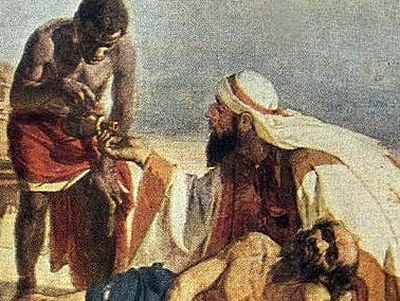
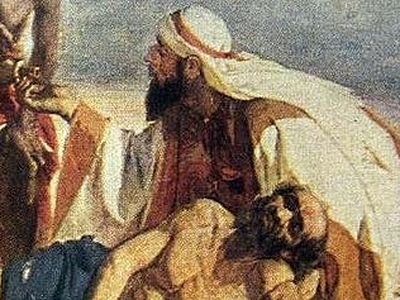
“The Parable of the Good Samaritan”, Parish life, Fr Victor Potapov. Also available at http://www.stohndc.org/parables


[1] This homily was transcribed from one given On November 11, 1996 according to the church calendar (11/24 ns), being the Twenty Fifth Sunday after Pentecost, and the day appointed for the commemoration Holy Martyrs Menas of Egypt, Victor and Stephanida at Damascus and Vincent of Spain The Epistle reading appointed is Ephesians Eph 4:1-6, and the Gospel is Luke 10:25-37. There are some stylistic changes and minor corrections made and several footnotes have been added, but otherwise, it is essentially in a colloquial, “spoken” style. It is hoped that something in these words will help and edify the reader, but a sermon read from a page cannot enlighten a soul as much as attendance and reverent worship at the Vigil service, which prepares the soul for the Holy Liturgy, and the hearing of the scriptures and the preaching of them in the context of the Holy Divine Liturgy. In such circumstances the soul is enlightened much more than when words are read on a page.

[2] Luke 8:41-56 (read on the 24th Sunday after Pentecost)

[3] Luke 10:25

[4] Luke 11:42

[5] The Reading appointed for Martyr Menas and the other martyrs is Matthew 10:32-33,37-38,19:27-30. At the end of the reading, Christ says: “Verily I say unto you, That ye which have followed me, in the regeneration when the Son of man shall sit in the throne of his glory, ye also shall sit upon twelve thrones, judging the twelve tribes of Israel. And every one that hath forsaken houses, or brethren, or sisters, or father, or mother, or wife, or children, or lands, for my name’s sake, shall receive an hundredfold, and shall inherit everlasting life.” (Matthew 19:28-29).

[6] The story of the Rich man and Lazarus is in Luke 16:19-31, and is read on the 16th Sunday after Pentecost. The rich man, in hell, wanting to save his brothers, has the following discussion with the Holy Prophet Abraham: “I pray thee therefore, father, that thou wouldest send him to my father’s house: For I have five brethren; that he may testify unto them, lest they also come into this place of torment. Abraham saith unto him, They have Moses and the prophets; let them hear them. And he said, Nay, father Abraham: but if one went unto them from the dead, they will repent. And he said unto him, If they hear not Moses and the prophets, neither will they be persuaded, though one rose from the dead.” (Luke 19:27-31)

[7] Luke 10:26-27 (cf. Duet 6:5: “And thou shalt love the LORD thy God with all thine heart, and with all thy soul, and with all thy might.”

[8] Mark 12:31

[9] John 13:34-35

[10] Luke 10:28

[11] Cf. Matthew 18:22. This expression, “seventy times seven” is an indication of an infinite number.

[12] Luke 10:29

[13] Luke 10:30

[14] Psalm 48:1-2

[15] Luke 10:31-32

[16] Luke 10:33

[17] Luke 10:34

[18] The Gospel for the 24th Sunday after Pentecost, read the preceding week, is Luke 8:41-56. It tells the story of the healing of the woman with an issue of blood, and the raising of Jairus’ daughter.

[19] John 14:2-3

[20] John 15:14-17

[21] Matthew 11:29-30

[22] Matthew 7:13-14

[23] Matthew 7:21

[24] Matthew 10:32-33

[25] Luke 10:35

[26] Cf. 1 Cor. 3:6 “I have planted, Apollos watered; but God gave the increase.”

[27] Cf. Mark 9:41 “For whosoever shall give you a cup of water to drink in my name, because ye belong to Christ, verily I say unto you, he shall not lose his reward.”

Храм Новомученников Церкви Русской. Внести лепту
Комментарии
Castrese Tipaldi 2 декабря 2015, 15:00
This is a very beautiful sermon, indeed, but maybe a few more words would be needed about the fact that the figure of Christ here is a Samaritan.
Здесь Вы можете оставить свой комментарий к данной статье. Все комментарии будут прочитаны редакцией портала Православие.Ru.
Войдите через FaceBook ВКонтакте Яндекс Mail.Ru Google или введите свои данные:
Ваше имя:
Ваш email:
Введите число, напечатанное на картинке Tamilyogi Ratchagan Tamil Movie